Blog
Published:
UV-C Technology in Gastronomy – Cleaner Air, Safer Kitchens
In professional kitchens, air never stands still — along with it, however, travel grease aerosols, steam, and odours. These pollute the kitchen environment, burden the ventilation system, and increase the risk of fire and contamination. UV-C technology brings a breakthrough solution that raises hygiene and safety to a new level — breaking down grease residues and odorous particles directly inside the system, without chemicals or complicated maintenance.
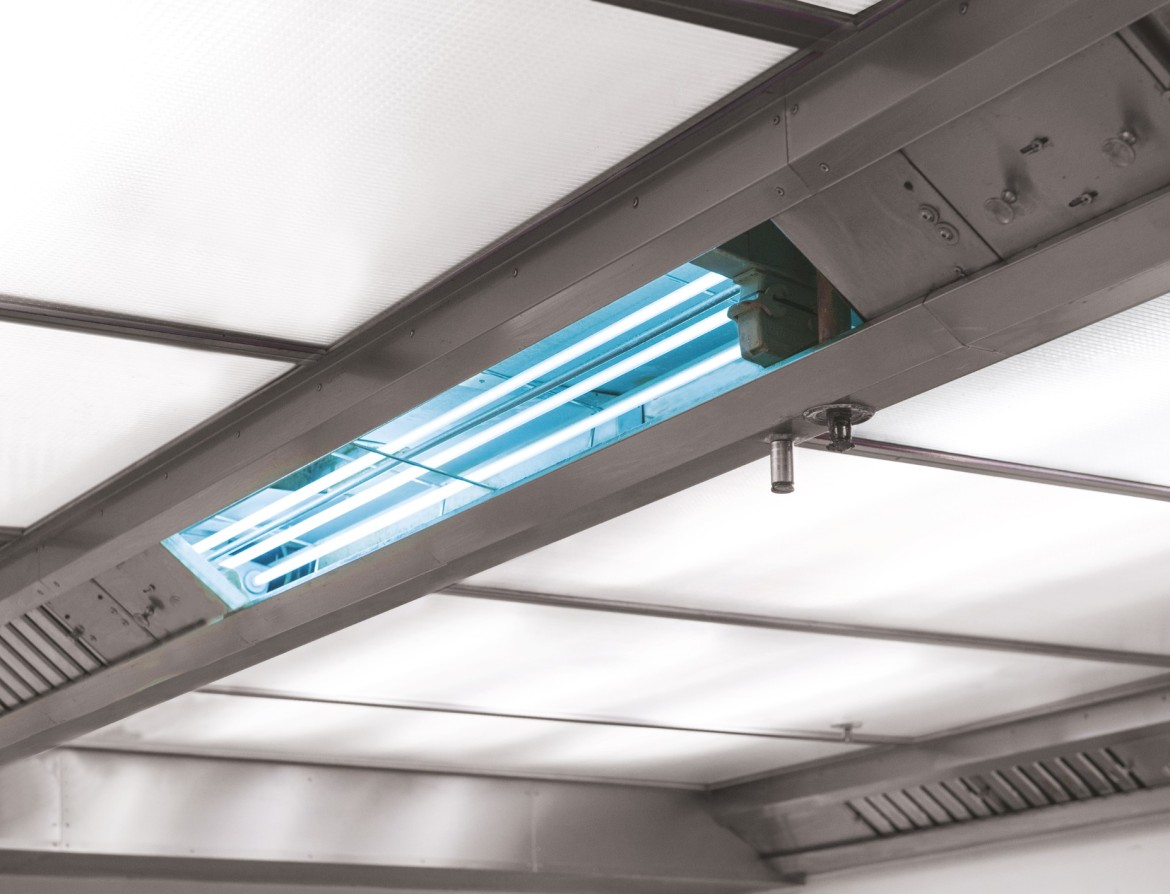
How UV-C Technology Works
UV-C (ultraviolet radiation at 254 nm wavelength) destroys microorganisms at the DNA level while breaking down organic compounds contained in kitchen grease and fumes. Combined with lamella or cyclone grease filters, it can effectively eliminate up to 99% of grease particles and odours. In practice, this means significantly longer duct-cleaning intervals, reduced fire risk, and cleaner air both in the kitchen and adjacent spaces.
If you’re interested in how mechanical filtration works, see our related article Grease Filters in Professional Kitchens – Safe, Efficient and Hygienically Clean Environment for Professionals explaining the difference between lamella and cyclone separators and their benefits for long-term system performance.
Why UV-C Technology Pays Off
Traditional mechanical filtration has its limits — fine aerosols and volatile substances often pass through. UV-C light acts directly at the source, decomposing remaining grease and odour molecules that would otherwise accumulate inside ducts or fans. This leads to:
- 30% higher filtration efficiency compared to mechanical filtration alone,
- lower maintenance and cleaning costs,
- consistent ventilation performance over time.
UV-C systems also comply with the European standards EN 16282 and VDI 2052, which define hygiene requirements for professional kitchen ventilation.
Where UV-C Is Used
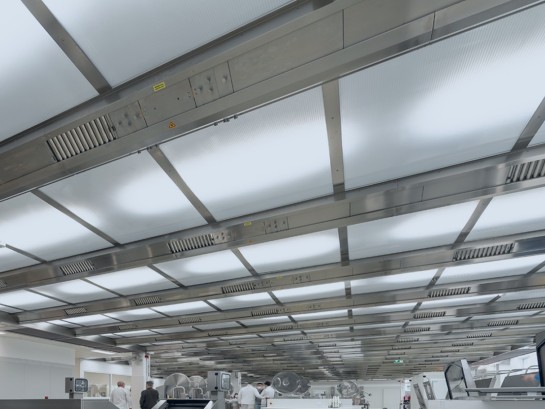
UV-C technology is used in professional kitchens of all sizes — from hotel restaurants to large catering facilities. It is most commonly integrated into ATREA TPV ventilation ceilings. In large-scale projects, it works together with DUPLEX heat recovery units, ensuring complete air hygiene and long-term operational reliability.
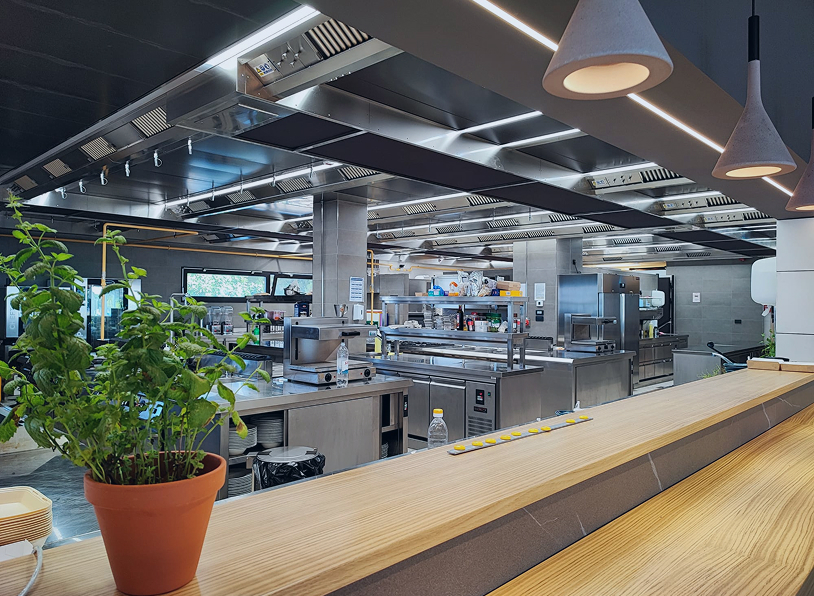
How UV-C Improved Air Quality at Zaton Holiday Resort
At Zaton Holiday Resort in Croatia, the challenge was to maintain clean air, stable ventilation performance and hygiene during the demanding summer season. Hundreds of meals are prepared daily, generating large amounts of grease, steam, and odours that strain the kitchen’s HVAC system.
The solution was the installation of ATREA TPV ventilation ceilings with integrated UV-C filtration. This system decomposes grease and organic compounds continuously during operation — preventing them from settling inside ducts and on fans.
The result? Permanently clean environment, less frequent maintenance, and up to 99% filtration efficiency. UV-C technology has proven to extend the system’s lifespan while improving hygiene and reducing energy costs — even in the toughest kitchen conditions.
Read the full case study: Zaton Holiday Resort
The Future of Kitchen Hygiene
UV-C is becoming a new standard in modern gastronomy. It combines high efficiency, simple operation, and low running costs. Together with heat recovery and heat pumps, it forms the foundation of energy-efficient, hygienically safe kitchens of the future.
Contact Us
Planning a new kitchen or an upgrade to your ventilation system? We’ll help you integrate UV-C technology into your project for maximum hygiene, safety, and energy efficiency.
Get in touch – let’s design a kitchen that stays clean and safe every day.
Author:
Jan Foret, Commercial Kitchen Ventilation Expert
Contact us
Tell us how we can help
Do you have questions, need advice, or want more information about our products and services? Let us know through this contact form. Our team will respond as soon as possible with a solution customized just for you.